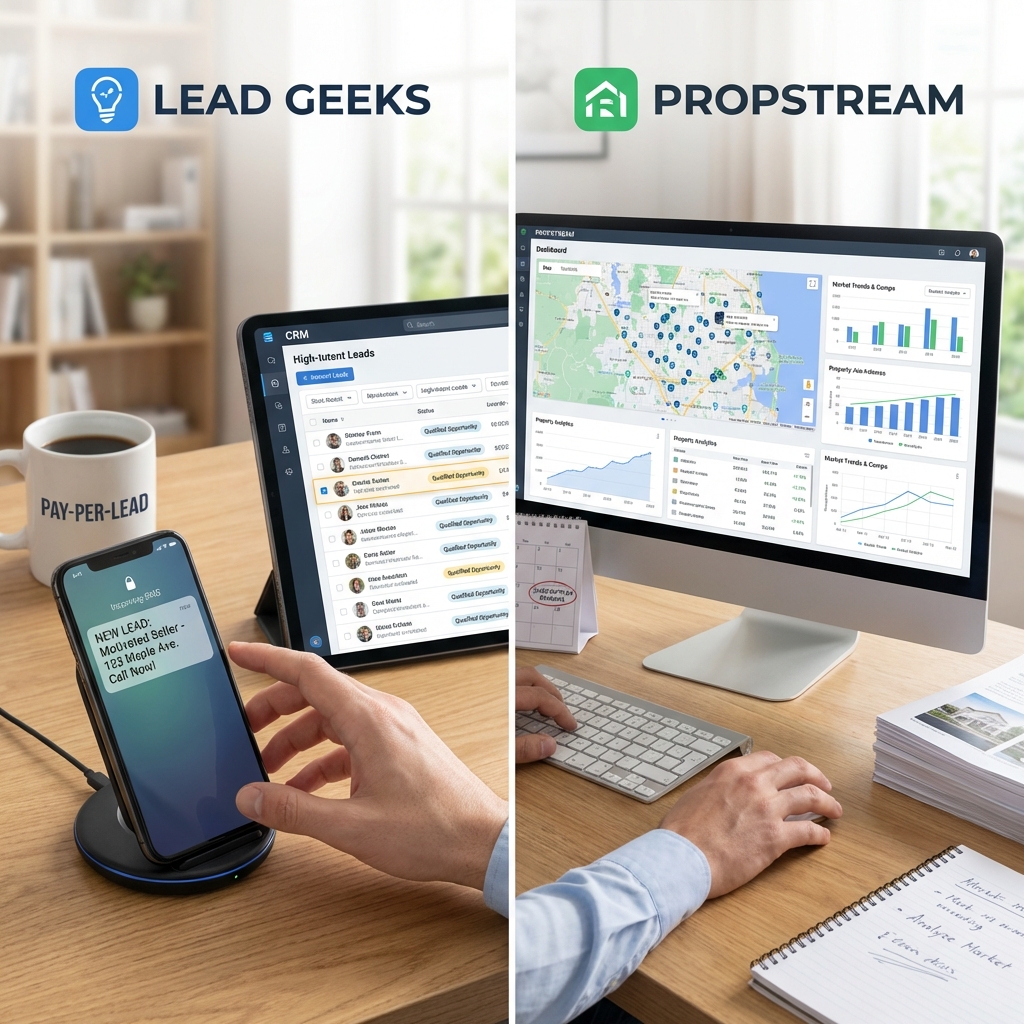
The Scalability Problem: Why Manual Lead Management Fails Growing Teams
When you’re juggling ten leads a week, spreadsheets feel manageable. When you’re handling fifty, they become a liability.
We’ve watched experienced real estate investors and agents hit a wall around the three to five-year mark. They’ve built profitable businesses, developed solid buyer networks, and refined their closing process. But their lead management infrastructure hasn’t evolved with them. Leads arrive via email, text, phone calls, and referrals. Someone manually enters each one into a spreadsheet. Follow-ups happen when someone remembers to check the column marked “Next Contact Date.” Data gets duplicated across multiple files. Pipeline visibility becomes murky.
The result? Your team wastes 8-12 hours per week on data entry alone. More critically, you lose deals. A motivated seller who doesn’t hear back within 24 hours starts calling other investors. A follow-up email gets lost in someone’s inbox. A hot lead sits in a spreadsheet column because the sale got assigned to two different team members.
The scalability problem isn’t a technology question at this stage. It’s an operational one. Manual processes worked when your business was smaller because the friction was tolerable. At scale, that same friction compounds into lost revenue and frustrated team members burning out on administrative work.
What to do next: Audit your current lead flow this week. Track how many leads arrive daily, which channels they come from, and how many touch points each lead requires before conversion or disqualification. You’ll see exactly where manual management creates bottlenecks.
Manual Processes vs Integrated CRM Systems: The Core Differences
The gap between spreadsheet-based management and a proper integrated system goes far beyond convenience. We’re talking about fundamentally different operational models.
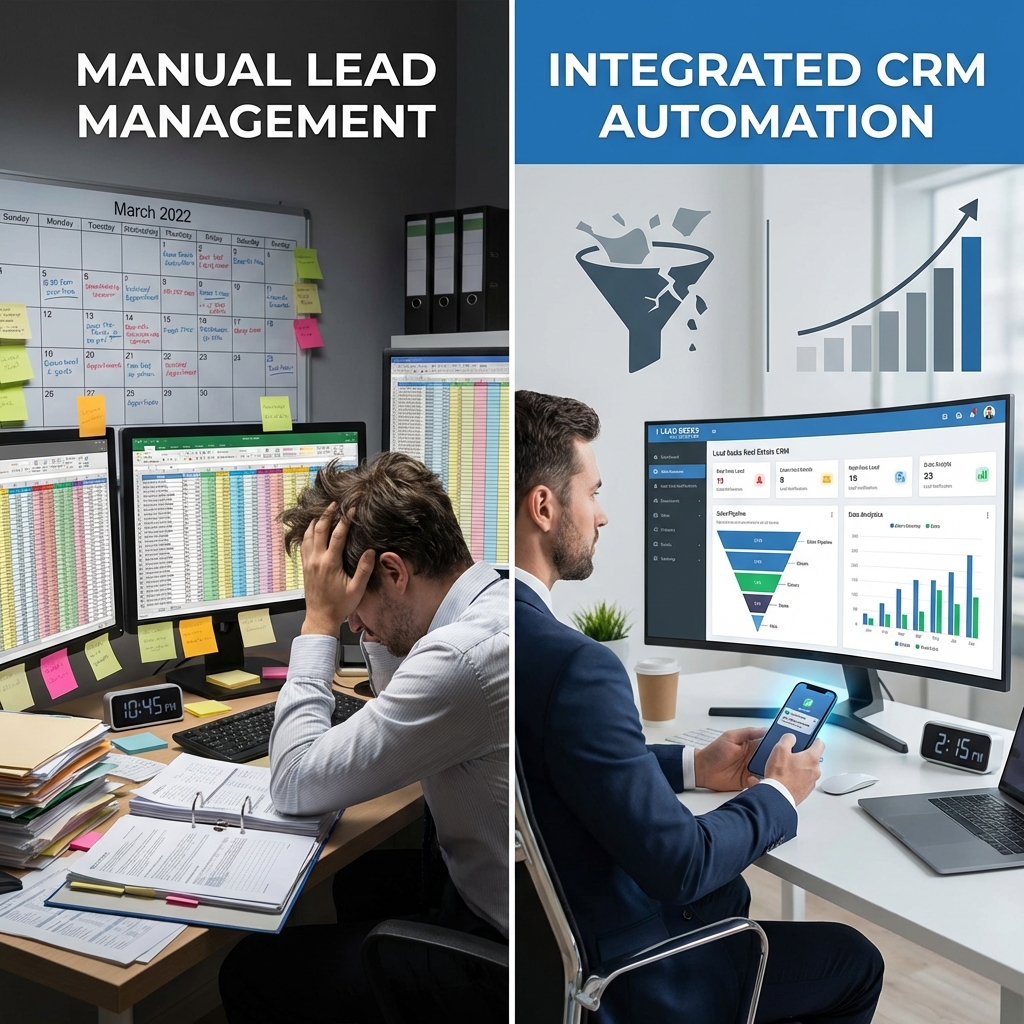
With manual processes, you own each step. A lead comes in. Someone reads it. Someone types it into a system. Someone else reviews it. Someone sets a reminder to follow up. Each handoff introduces delay and error. If your team grows to five people, you’ve added invisible coordination costs between every interaction.
An integrated CRM system creates a single source of truth. When a lead arrives at our LeadGeeks platform, it syncs directly into your CRM in real-time. Your entire team sees the same information simultaneously. Automation rules trigger follow-ups without human intervention. Historical data is preserved and searchable. There’s no ambiguity about lead status or next steps.
The practical differences matter:
- Lead visibility: With manual processes, leads live in whoever’s inbox captured them. With integration, every team member sees every lead within seconds.
- Workflow consistency: Manual follow-up depends on individuals remembering steps. Integration enforces the same process every time for every lead.
- Historical context: A spreadsheet shows you what’s there today. A CRM shows you the entire conversation history, previous contact attempts, and outcome patterns.
- Mobile access: Manual systems typically require being at a desk. Integrated systems let your team access and update leads from anywhere.
- Reporting accuracy: Manual reporting requires someone to count and categorize rows. Integration generates accurate reports automatically.
The efficiency gains compound over time. A team managing 50 leads monthly through spreadsheets might spend 15-20 hours on administrative work. The same team using an integrated system spends 2-3 hours, mostly on strategic follow-up rather than data entry.
What to do next: Ask your current CRM provider (or evaluate new ones) which platforms we integrate with. Check whether lead data can flow automatically rather than requiring manual import. If your current system doesn’t support direct integration with your lead source, it’s already limiting your growth.
Real-Time Lead Delivery and Synchronization Advantages
Speed matters enormously in real estate. A seller motivated enough to reach out to investors often has multiple people calling within hours. The team that responds first has the advantage.
We deliver leads to your CRM the moment they come through our platform. Not at end of day. Not after someone reviews them. Real-time. That means your team sees a hot lead within 60 seconds of them submitting their information.
Real-time synchronization does more than accelerate initial response. It prevents duplicate work and keeps your pipeline accurate throughout the day. When your acquisition manager closes a lead, that status change reflects immediately in every team member’s view. When a lead responds to an SMS, that interaction logs automatically to their CRM record. When you add a note about next steps, your team sees it instantly.
Without synchronization, different team members often work with stale information. One person doesn’t know another already made contact. Two people call the same seller on the same day, damaging rapport. A lead status says “hot prospect” when they actually requested to be taken off the list. These scenarios waste time and cost deals.
Real-time integration also improves decision-making. You see your current pipeline composition as it actually exists, not as it existed this morning. You know whether you’re hitting your weekly targets or falling behind. You can adjust your outreach volume intelligently rather than guessing.
What to do next: Test the speed of your current system. Have a team member submit a test lead and time how long it takes to appear in your CRM. If it’s longer than five minutes, your synchronization lag is costing you deals.
Integration Speed: Getting Started in Minutes vs Weeks
We’ve designed our integration to be frictionless for experienced teams like yours. Most real estate professionals have the accounts and permissions they need already in place. Connecting to your CRM typically takes 5-10 minutes.
Compare that to traditional lead sources. Many require you to hire someone to manage the integration, navigate IT approval processes, configure custom fields, and validate that data mapping is working correctly. You might wait two weeks before you see your first lead in your system. During that time, your sales team can’t rely on the new source, so adoption stalls.
With our approach, your team starts receiving leads the same day they sign up. There’s no implementation project. No standing meetings with integration specialists. No weeks of parallel testing while you maintain your old system simultaneously.
This matters more than it might seem. When adoption is frictionless, your team uses the system immediately. They build habits around it. They start seeing results quickly. Enthusiasm stays high.
Lengthy implementations create psychological friction too. Your team thinks, “This is going to be complicated, so I’ll stick with what I know.” They develop workarounds. The new source becomes a backup rather than primary. You never get the full benefit because your team never fully commits.
Our philosophy is different. We remove friction so your team can focus on what they’re good at: closing deals.
What to do next: Ask any new lead source about their integration timeline before you commit. If they can’t get you live in under an hour, ask why. That integration delay directly delays your ROI.
Data Accuracy and Lead Quality Assurance Through Automation

Manual data entry inevitably introduces errors. Someone transcribes a phone number incorrectly. A property address gets abbreviated in a way that’s meaningless later. A lead’s motivation gets summarized so vaguely that your team doesn’t know whether it’s a motivated seller or just a curious caller.
Automated integration eliminates transcription errors entirely. The data comes from our system to yours without human interpretation or retyping. What you see is what the seller submitted.
More importantly, automation enforces data quality standards before leads reach your team. We validate phone numbers, cross-reference property addresses against public records, and qualify leads based on clear behavioral signals. Bad leads and spam don’t make it to your CRM at all.
You also get comprehensive lead quality assurance. When a lead performs well in your process (high contact rate, quick close), we track that. When a lead turns out to be poor quality, that’s tracked too. Over time, this data informs which sellers are reaching us, where they’re coming from, and what their actual intent level is.
Manual systems can’t do this. If someone enters the data wrong, you don’t know until your team tries to contact them. If you get spam, it’s mixed in with legitimate leads. You can’t systematically identify patterns because the data quality is inconsistent.
Our LeadGeeks leads are exclusive and high-intent specifically because we have quality control automated into every step. We know what a serious seller looks like because we measure it continuously. Your team gets exclusively the leads that match that profile.
What to do next: Review your current lead sources for accuracy. Call 10 recent leads and verify the information in your system matches what the seller provided. You’ll likely find 1-2 have significant errors. That’s your quality baseline.
Cost Efficiency: Performance-Based Models vs Monthly Retainers
Traditional lead sources operate on a monthly subscription model. You pay whether you use the leads or not. You pay whether they convert or not. That structure works for the lead provider. It doesn’t necessarily work for you.
If you pay $3,000 monthly for leads but only generate $8,000 in profit from those leads after accounting for your time, you’ve cut your margin significantly. If one month is slow, you’re still paying full price. If you land a major wholesale deal and don’t need leads for three weeks, your subscription cost doesn’t adjust.
We built our model differently. You only pay us when we deliver a lead you contact. There’s no monthly retainer. No setup fees. No minimum commitments. Our financial incentives align with yours: we succeed when we deliver leads that actually produce deals for you.
This changes how you approach lead generation entirely. You’re not trying to maximize ROI on a fixed cost. You’re evaluating whether each individual lead is worth the per-lead price. You have the flexibility to pause when you’re closing deals. You can scale up rapidly when you’re ready to grow.
The cost comparison is stark for teams running at scale. An agent paying $5,000 monthly to a lead service might contact 60 leads and close one deal. Their cost per close is approximately $60,000 (including their own time). That same agent using our model might pay $200-400 per lead they contact, close the same deal, and pay us a total of $2,000-4,000. Their cost per close drops to $4,000-6,000 while using better-qualified leads.
The performance-based model also ensures you’re getting quality. If we delivered poor leads, you wouldn’t contact them, and we wouldn’t get paid. We have to maintain high quality or our revenue disappears. Monthly subscription models can afford to be complacent.
What to do next: Calculate your true cost per close with your current lead sources. Include the monthly subscription, the leads you contacted, and your time invested. Then compare it to a performance-based model at our per-lead rate. The difference is usually 40-60% in your favor.

Why LeadGeeks Leads Drive Superior Results With Your CRM
We’ve seen teams dramatically improve their performance when they combine exclusive, high-intent leads with integrated CRM systems. The combination matters because each component does something the other can’t.
Our leads work because they’re exclusive and motivated. A seller reaching us has already identified themselves as needing to move their property. They’re not just curious. They haven’t called five other investors. They’ve chosen to contact a platform specifically designed to connect them with serious investors. That pre-qualification means your conversation starts at a different level than leads from generic marketplaces.
The CRM integration amplifies that advantage. Because leads land in your system instantly and automatically, your team can respond within the first hour. That responsiveness is the difference between being first to contact and being fifth. In real estate, that’s often the difference between winning and losing the deal.
The combination also lets you build sophisticated follow-up sequences that work at scale. You can automate initial contact templates, set intelligent reminders based on seller behavior, and escalate high-value leads to your top negotiators automatically. Manual processes can’t do this because the overhead becomes unsustainable.
Our teams have reported average response times dropping from 6-12 hours to 15-30 minutes. Deal volume increasing 25-40% with the same team size because administrators spend less time on data entry and more time on actual deals. Win rate improving 10-15% because sellers know they’re working with organized, professional teams.
These aren’t unusual outcomes. They’re predictable results of combining qualified leads with efficient systems.
What to do next: Have a discovery call with us to understand exactly which of your current CRM systems we integrate with and what your specific workflow would look like.
Making the Smart Choice for Your Team’s Growth
You’ve built a successful real estate business by making disciplined operational decisions. Choosing the right CRM integration strategy is one of those decisions.
The evidence is clear: manual processes stop working around the time you hit 30-40 leads monthly. They become operational drag that prevents growth. Spreadsheets become liabilities. Your best team members spend time they should spend on closing deals doing data entry instead.
An integrated system with automated lead delivery isn’t a luxury. It’s the operational foundation that lets you scale beyond a certain point. Without it, you’re limited by the number of leads your team can manually manage, which is typically 60-80 per person monthly. With integration, that number can double because your team spends their time productively rather than administratively.
Choosing the right lead source to integrate with matters equally. You want leads that are actually worth your time: exclusive, high-intent, and pre-qualified. You want a pricing model that rewards quality over volume. You want a partner that succeeds when you succeed.
We’ve spent years building our lead generation system to deliver exactly that. We qualify sellers rigorously. We deliver leads in real-time to your CRM. We price based on performance, not promises. We integrate seamlessly so your team gets to work immediately with minimal setup friction.
If you’re at the point where manual lead management is holding your team back, the path forward is clear. The combination of our exclusive leads and your integrated CRM system will transform your operational efficiency and pipeline quality. That’s not an optimization. It’s the difference between businesses that plateau and businesses that scale.
Reach out when you’re ready to move forward. We’ll have you live and receiving leads within 24 hours.